Preface:
Decoding the Fall of Sheikh Hasina’s Regime

For the sake of scholarly inquiry, the world must examine the principal causes behind the dramatic collapse of Sheikh Hasina’s government in Bangladesh in 2024. On the surface, her regime appeared legally entrenched, even embarking on a fresh five-year mandate with a robust internal apparatus. Yet, it met an abrupt demise—not at the hands of political rivals, but through a grassroots student movement that swelled into a national uprising.
Was this downfall merely the product of transient public discontent, ignited by student protests and amplified by authoritarian overreach? The tipping point undeniably arrived after violent state crackdowns in June 2024, triggered by demands for modest reforms to the civil service quota system. What began as a localised campaign swiftly escalated into a revolt against Hasina’s leadership, culminating in her flight from power. Any Conspiracy theory behind? Well, under the spotlight of all international media, why could Sheikh Hasina, the iron lady, not handle the pressure on the nerve?
A superficial list of proximate causes—student protests, escalating violence, discredited elections, and military ambivalence—explains the immediacy of her ouster. Undoubtedly, these played a significant part in her downfall. Yet, they represent only the tip of the iceberg. The deeper, structural causes that gave rise to these developments—and caused them to converge so explosively—demand thorough examination. In this article, we explore ten such underlying reasons, with the hope of provoking deeper reflection and informed discourse. There may be reasons beyond these ten reasons. Yet, the deeper, systemic failures that catalysed such widespread rebellion demand rigorous analysis. This article, limits to ten such underlying causes considering that all others would cater for these, inviting readers to interrogate the structural decay that doomed an ostensibly unshakable regime.
Let’s begin with the last one first.
Reason#10
Infidelity in the Military
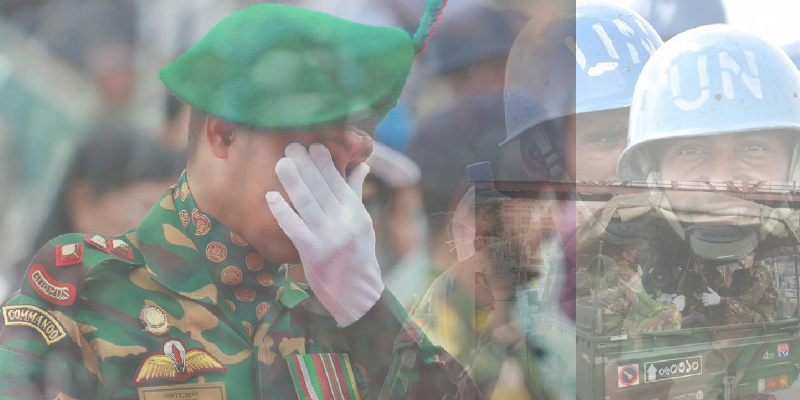
Infidelity in the Military: A Critical Factor in Sheikh Hasina’s Downfall, 2024
This may ultimately be regarded as the decisive factor behind the collapse of Sheikh Hasina’s regime in many scholarly discourse. Some might opine that since the military has no confidence in Sheikh Hasina government, like it happened before, now too this is the principal reason. Despite holding the position of Defence Minister throughout her premiership, Hasina rarely engaged directly with the armed forces in any substantial or ceremonial capacity. Her interactions with the military were filtered through a limited circle of advisors, fostering a mutual sense of detachment. While she regularly sought the services of the defence forces, she kept them at arm’s length, resulting in a growing disconnect over her 15-year tenure.
One of the earliest and most significant ruptures in Hasina’s relationship with the military occurred just months into her first term in 2009. The Bangladesh Rifles (BDR) mutiny—a violent and unprecedented insurrection—claimed the lives of 74 individuals, including 57 army officers. Many within the armed forces viewed Hasina’s response as overly lenient and politically expedient. The belief that the government had failed to act decisively, or had even allowed the massacre to unfold, left a lingering sense of betrayal among many in uniform. This moment marked the beginning of a deep-rooted mistrust that would fester throughout her rule.
Politicisation of the Armed Forces
Traditionally, Bangladesh’s military had remained staunchly apolitical, with political discourse considered a taboo within its ranks. That norm began to erode under Hasina’s administration. Allegations of politicisation grew, particularly with the promotion of officers perceived as loyal to the ruling Awami League, and the marginalisation of those who were not. The military’s meritocratic structure was undermined, replaced with a culture where sycophancy towards Sheikh Hasina instead of national sovereignty, was rewarded over professionalism.
As promotions and key appointments increasingly reflected political alignment rather than competence, an internal schism began to form. Frustration mounted among capable officers who saw their careers stunted in favour of less qualified but politically favoured colleagues. The perception that the military was being co-opted for political ends bred widespread resentment and weakened the institution’s integrity and unity.
Foreign Policy and Allegations of External Influence
Hasina’s perceived closeness to India—manifested through defence cooperation, transit agreements, and diplomatic posturing—was another major source of unease within the armed forces. The Bangladesh Army, with the mandate to safeguard national sovereignty, became increasingly alarmed by what it viewed as Hasina’s undue concessions to Indian interests.
The reorientation of military training, doctrine, and even academic discourse to present India as a strategic ally came as a major surprise to defence experts, as it stood in stark contrast to decades of entrenched doctrine that had regarded India as a potential threat. It was whispered within military circles that key appointments required informal approval from Indian bosses, a belief that undermined the authority of the Prime Minister herself, despite her formal role as Defence Minister.
The Defence Advisor to Sheikh Hasina, already an unpopular figure, came to symbolise the widening rift between her government and the military. Tensions escalated further when an Al Jazeera investigation, aired on 1 February 2021, exposed allegations of corruption and nepotism involving the then Army Chief, General Aziz Ahmed. Many believed his appointment had been influenced by foreign interests—raising serious concerns about the erosion of national sovereignty.
The presence of an army chief facing such allegations was deeply unsettling, casting doubt on the integrity of Bangladesh’s defence establishment. The government’s efforts to suppress the story only fuelled greater public curiosity and internal resentment. In a country like Bangladesh, where the Army Chief is regarded as a cornerstone of national defence, even the slightest controversy can leave a lasting dent in institutional solidarity.
Electoral Manipulation and the Marginalisation of the Military
A critical turning point emerged in the run-up to the 2018 general elections. Widespread reporting had indicated that, under free and fair conditions, the ruling party would struggle to win more than 20% of parliamentary seats. Traditionally, the military had played a neutral and stabilising role in Bangladesh’s electoral process, safeguarding both election security and public confidence.
However, Sheikh Hasina’s decision to marginalise the military in favour of partisan police and paramilitary forces—alongside extensive electoral manipulation—deeply alienated the armed forces. Many mid-ranking officers viewed this as an erosion of the electoral process and a violation of the army’s constitutional responsibilities. A sense of betrayal began to take hold, particularly among those committed to constitutional duties of Military.
Notably, members of the military, as voters, showed little interest in participating in what were widely perceived as pre-determined elections. This quiet disengagement signalled a tacit withdrawal of support—an unsettling development that left the regime uneasy and perpetually wary of the military’s stance.
By the time of the 2024 election, this resentment had solidified into active dissent. The military, having learned from 2018, refused to be used again as a tool for legitimising electoral fraud. The regime’s harsh response to the military’s neutrality in 2024 further cemented the schism.
The “Toothless Tiger” Syndrome
The armed forces’ perceived impotence in the face of regional and internal challenges—Myanmar’s aggression along the border, the uncontrolled influx of Rohingya refugees, and Hasina’s deference to Indian and Chinese regional ambitions—also contributed to the breakdown in trust. The military increasingly viewed the government as indifferent to national defence concerns and lacking confidence in their capabilities.
This perception of being reduced to a “toothless tiger” created internal disillusionment, particularly as international scrutiny mounted over Bangladesh’s handling of sovereignty and humanitarian issues. Some officers believed the government had failed to assert Bangladesh’s interests on the global stage, thereby compromising national pride and security.
The Major Sinha Killing and Military Backlash
The murder of retired Major Sinha Mohammed Rashed Khan on 31 July 2020 marked a watershed moment. The incident, in which a retired officer was mysteriously shot dead by police, triggered widespread outrage among serving and former military personnel. It symbolised the increasing encroachment of the police into military jurisdiction, and the vulnerability of even decorated officers to political and institutional violence. This created a profound impact among the retired military officers who even after retirement, are still influential among the service officers being their previous instructors or mentors.
The subsequent backlash from army officers, particularly on social media, made it clear that the silent dissent within the ranks had become open defiance. The narrative that foreign actors—particularly Indian intelligence agencies—were orchestrating a campaign to weaken and discredit the Bangladesh Army, began to take root among both serving officers and veterans.
International Pressure and Eroding Credibility
As Western governments intensified pressure on the Hasina administration over democratic backsliding and human rights abuses, the military found itself inadvertently complicit due to its past cooperation with the regime. Bangladesh’s prized role in UN peacekeeping missions came under threat, and the image of the military as a professional, neutral force was called into question. This further strained the already fragile relationship between the military and regime leadership.
The Final Rift: Military versus Civil Collapse
By the early 2020s, the military had withdrawn its tacit support for Hasina. The sanctions by the US on RAB eroded the confidence in the flimsy political structure of the regime in terms of reputation risk of the entire military force of the country. The regime’s traditional support structure—built on surveillance, coercion, and controlled narratives—crumbled. In a last-ditch effort, Hasina attempted to deploy the military to crush public dissent in 2024. However, the military refused to be drawn into a confrontation with civilians who, in fact, they are mandated to protect instead. Their refusal likely averted a full-blown civil conflict. Sheikh Hasina’s political immune system—once reliant on control of information, loyalty of law enforcement, and foreign backing—failed completely. Isolated from the armed forces, her regime stood defenceless.
Exclusive: Bangladesh army refused to suppress protest, sealing Hasina's fate
This article is an immediate analysis by the global news media. Interestingly, this analysis is composed in Delhi. Hence the writers could not undermine the perceptions brewing among the Indian think tanks on the backdrop of the Western understanding.
The Reuters
Reason#9
Compromised Sovereignty
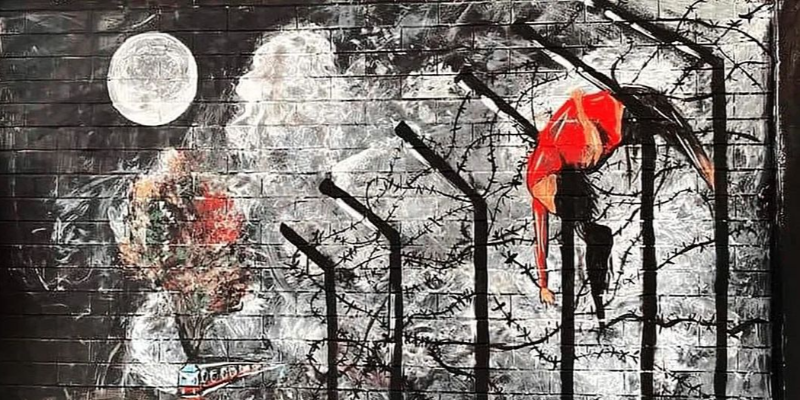
The Erosion of Sovereignty Under Sheikh Hasina (2009–2024)
The sovereignty of Bangladesh under Sheikh Hasina’s regime (2009–2024) faced relentless scrutiny, both at home and abroad. The cracks in the nation’s autonomy became starkly apparent on 25 February 2009, when an unthinkable atrocity unfolded: 57 army officers, deputed to the Bangladesh Rifles (BDR), were brutally killed in what was hastily labelled a "mutiny."
Yet, defence analysts—military and civilian alike—soon uncovered a far more sinister truth. This was no ordinary uprising. Evidence pointed to coordinated deep-state operations, implicating both Bangladeshi and Indian actors, transforming a volatile situation into a choreographed massacre. Under Bangladeshi law, mutiny is treason—the gravest of crimes. But this was no spontaneous act of rebellion; it was a cold-blooded, meticulously staged purge, designed to cripple the nation’s defence apparatus from within. The regime’s handling of the aftermath only deepened suspicions. Perpetrators were allowed to flee the country; investigations were sabotaged, with highly classified evidence vanishing as if by sleight of hand. The trials that followed became a theatrical farce, shielding the true architects of the slaughter. To this day, the victims’ families demand justice—and answers.
The incident forced the nation to confront harrowing questions:
· If the army’s own officers were not safe, who would defend Bangladesh?
· If the guardians of sovereignty could not trust one another, how could they protect the state?
· Why did the elements within the defence establishment actively obstruct the truth?
At its core, these doubts coalesced into a single, damning inquiry: Was this regime complicit in undermining the very sovereignty it swore to uphold?
For many, the BDR massacre marked the first deliberate fracture in Bangladesh’s sovereignty—a fracture that would widen over the next decade, as foreign influence grew and national autonomy withered.
The Fall of Sheikh Hasina’s Regime: How Compromised Sovereignty Sealed Its Fate?
The 2009 BDR (Bangladesh Rifles) massacre had profound consequences for Bangladesh’s sovereignty: it left the nation’s military forces subdued and its borders vulnerable. Yet, what became increasingly apparent during Sheikh Hasina’s regime were the implicit ties to Indian intelligence agencies—a connection that could not remain hidden indefinitely.
India’s blatant support for the dismantling of Bangladesh’s electoral integrity was unmistakable. Over the next decade, New Delhi played an undeniable role in propping up a compromised democratic process, ensuring controversial victories for Hasina in the 2014, 2018, and 2024 elections. Far from a covert operation, India’s interference was an open secret, celebrated by Dhaka’s ruling elite. Hasina herself made little effort to conceal her government’s alignment with Indian interests, granting New Delhi unprecedented influence over critical state matters, including national defence—a domain where sovereignty should be sacrosanct.
The irony, however, lay in the unresolved grievances that continued to strain bilateral relations. While the Hasina regime and India cosied up, longstanding critical issues for Bangladesh—border killings by India’s BSF, the unresolved Teesta River water-sharing dispute, and a grotesquely imbalanced trade relationship—were brushed aside with blatant disregard. The Bangladeshi people were denied even the basic right to discuss such matters openly. The brutal killing of a bright BUET student by Chhatra League members, merely for writing a criticism on his Facebook post on such a topic. This ignited an unquenchable fury among the youth. This single act of repression etched permanent outrage into the collective consciousness of a generation. For ordinary Bangladeshis, this was not just a failure of diplomacy; it was a betrayal of national dignity.
As Sheikh Hasina razed all her opponents by 2016 and had no thorn on her path to consolidate Indian hegemony, Sheikh Hasina’s government prioritised a series of economic projects that disproportionately favoured New Delhi’s interests. Over time, reports emerged of direct interference in Bangladesh’s internal governance, with key government offices allegedly receiving directives from unnamed Indian sources.
The Subversion of Governance: Foreign Influence and Institutional Collapse
The placement, deputation, promotion, and demotion of government officials under external pressure—particularly from India—became an open secret, eroding the morale of patriotic civil servants. When bureaucrats no longer knew who truly commanded their allegiance, the chain of command disintegrated.
Nowhere was this more damaging than in the national defence, where officers committed to national sovereignty were systematically sidelined or purged. The regime’s preference for pliable loyalists over principled leaders raised grave concerns: if those entrusted with safeguarding the state could not act independently, who would defend Bangladesh’s sovereignty, then?
The corporate sphere fared no better. Faced with predatory foreign lobbies—chiefly Indian and Chinese—businesses found resistance futile. These entities operated with the tacit backing of the state, rendering domestic firms powerless against their influence. The result was a hollowed-out governance structure, where patriotism yielded to patronage, and sovereignty became negotiable resulting dwindled local corporates and SME business and flourishing agents of foreign brands in Bangladesh.
This influence was further amplified by orchestrated media campaigns. Ghostwritten articles, often published in pro-government outlets, shaped public perception and manipulated the psychology of Bangladesh’s governance system. Meanwhile, the financial sector spiralled into chaos. Rampant banking embezzlements—including the USD 1 billion scandal involving PK Halder, who fled to none other country than India—exposed glaring regulatory failures. Despite repeated requests for his extradition, India refused to repatriate him, raising serious questions about its role in shielding financial criminals. Imagine an Indian criminal came to take shelter in Bangladesh, could Bangladesh give that person a safe heaven? And what if that person was a Muslim by religion? Question does not arise, right?
The 2016 Bangladesh Bank heist, in which USD 81 million was stolen via the SWIFT system, later revealed troubling links to Indian operatives lurking in Bangladesh Bank. A pattern emerged: major crimes—fraud, abductions, and harassment—often traced back to cross-border networks, leaving Bangladeshi authorities either complicit or powerless.
Whistle-blowers, operating anonymously, leaked documents to social media activists, fuelling public anger. Yet, with Sheikh Hasina’s recent departure from power, the once-palpable pressure from India appears to have lifted—a tacit admission of the external forces that once dictated Bangladesh’s political and economic trajectory.
Sheikh Hasina’s government, once celebrated for its economic strides, ultimately collapsed under the weight of its own contradictions—chief among them, the erosion of Bangladesh’s sovereignty. Over the years, her administration’s alignment with foreign interests, particularly India’s, transformed from strategic partnership to perceived subservience, alienating both the public and institutions meant to safeguard national sovereignty .
The Illusion of Independence
While Bangladesh projected itself as a sovereign state, critical decisions, notably economic policies, defence agreements, and even electoral integrity, increasingly appeared dictated by external forces. Reports of Indian intelligence operatives influencing key ministries and corporate lobbies shaping legislation and foreign companies eating up most of the government spending fuelled public distrust. The regime’s inability to address border killings by India’s BSF or resolve the Teesta River dispute became emblematic of its acquiescence to New Delhi’s dominance. And small scale dominances were happening in a way as if the nation had to accept anyway at the end of the day.
A Hollowed-Out Democracy
The façade of democracy crumbled as elections in 2014, 2018, and 2024 were marred by blatant irregularities, with India’s overt support for Hasina’s victories stripping them of legitimacy. The opposition’s decimation, aided by judicial repression and media censorship, revealed a regime more invested in retaining power than upholding national self-determination. And India and China came to promote that raises severe sovereignty concerns.
Economic Colonisation by Proxy
Mega-projects, trade imbalances, and banking scandals (e.g., PK Halder’s billion-dollar embezzlement, shielded in India) exposed a financial system compromised by foreign leverage. The Bangladesh Bank heist (2016), linked to transnational networks, further underscored the state’s vulnerability to external exploitation.
The Military’s Silent Defiance
Though publicly loyal, Bangladesh’s military grew resentful of India’s encroachment on defence policy, including arms deals and joint exercises that prioritised New Delhi’s interests. This simmering discontent likely contributed to the regime’s eventual isolation. The crash of a Ukrainian Antonov An-12 cargo plane in Kavala, Greece, on 5 October 2022 revealed that the aircraft was transporting 11.5 tonnes of Serbian-made mortar shells and detonators en route from Serbia to Bangladesh. While Serbia confirmed the arms sale to Bangladesh on paper, Dhaka categorically denied any involvement. The incident raised serious questions about opaque arms supply chains to South Asia, particularly the role of third-party arms dealers in routing shipments under Bangladesh’s name. Curiously, the news quickly faded from mainstream coverage, either suppressed or deliberately buried.
Many analysts argue that while Bangladesh’s defence establishment may not have been complicit, the sovereignty tag was likely exploited as a façade by international smuggling networks. There are also unverified claims that the banned consignment was ultimately destined for India, implicating regional actors in the shadow arms trade and by accident it got revealed.
The Fall of Sheikh Hasina’s Regime: Compromised Sovereignty and the Shadow of Foreign Influence. The erosion of Bangladesh’s sovereignty under Sheikh Hasina’s regime was not merely a consequence of domestic missteps but a calculated outcome of competing foreign interests—primarily those of India and China.
The Geopolitical Chessboard
India’s entrenched influence over Bangladesh’s governance, economy, and defence under Hasina was unmistakable. New Delhi positioned itself as the regime’s "guide and mentor", dictating foreign policy while turning a blind eye to China’s encroachment via the Belt and Road Initiative (BRI). This paradox—India’s tacit acceptance of Chinese "loan traps"—revealed a cold calculus: Bangladesh’s economic gains, even under Beijing’s terms, would indirectly benefit India through trade and remittance flows.
Yet, India’s double standards were glaring. While Bangladesh was pressured by the regime to sever ties with Pakistan (a historical taboo for Delhi), it was encouraged to embrace China—despite Beijing’s opposition to Bangladesh’s 1971 liberation. Similarly, India blocked Bangladesh’s hydroelectric undertaking with Nepal and Bhutan by denying transmission-line access through a short distance (40km-50 km) of its territory, while demanding Bangladeshi land and ports by India to service its remote Seven Sisters region, is totally cynical. The message was clear: Dhaka’s sovereignty was negotiable; Delhi’s interests were not. And it is not only India.
A Shocking Revelation: St. Martin’s Island and the Erosion of Sovereignty
What stunned the nation was her undiplomatic disclosure in parliament—an alleged secret negotiation with the United States to cede St. Martin’s Island as part of a military strategy. The brazenness of this admission, delivered without regard for diplomatic protocol, left the public awed. While the US swiftly denied the claims, the damage was done: the very suggestion that Bangladesh’s sovereignty could be so casually bargained away sowed deep unease.
This was not merely a political misstep—it was a betrayal of trust. For the first time since independence, the nation confronted the unsettling reality that its territorial integrity might be compromised by its own leadership. The incident exposed a troubling pattern: a willingness to undermine national interests in pursuit of foreign alliances.
The fallout was immediate. Public discourse erupted with questions:
· Why was such a sensitive negotiation concealed until now?
· What other agreements remain hidden from scrutiny?
· How much of Bangladesh’s sovereignty has already been surrendered?
The episode left an indelible mark—a nation once proud of its hard-won independence now questioned its own security under a regime that seemed all too eager to please external powers.
The Security Vacuum
The regime’s subservience extended to national defence. Intelligence and military protocols were systematically compromised:
RAW’s Unchecked Access: Indian agents operated freely within Bangladesh’s cantonments under the guise of "joint training," rewriting military manuals to erase strategic threats (e.g., replacing "Wolf Land" for India with benign terminology).
Honey Traps and Blackmail: Bangladeshi officers reported coercion during training programmes in India, undermining institutional integrity.
Demilitarisation by Corruption: The military was diverted into infrastructure contracting, eroding its defensive readiness and also infusing corruption.
The Rohingya crisis further exposed this weakness. While neighbouring nations refused refugees, Bangladesh bore the brunt alone—a failure of diplomacy and intelligence that left borders unsecured. When Myanmar’s civil war spilled into Bangladeshi villages, the military’s inaction confirmed suspicions: command structures were no longer autonomous.
The Anti-India Backlash
Public resentment against Indian hegemony—simmering since 1971—boiled over during Hasina’s rule. Historical grievances resurfaced:
Post-1971 Exploitation: India’s confiscation of Pakistani arms (as "spoils of war") foreshadowed its extractive relationship with Bangladesh.
Media Vilification: Indian outlets branded Bangladesh as "ungrateful," while Amit Shah’s quite derogatory "termites" remark about the Bangladeshis cemented perceptions of hostility. Altogether, India lost its any capacity to befriend the youth of the nation everyway.
Youth Revolt: The generation that grew up under Hasina’s regime rejected her as India’s "client ruler", protesting her alignment with Delhi over Dhaka.
The Inevitable Fall
Sheikh Hasina’s Secrecy: Concealed Agreements and Eroded Trust
Sheikh Hasina’s regime consistently withheld crucial details of bilateral agreements and memoranda of understanding (MoUs) signed with India from public scrutiny—a deliberate opacity that further eroded her credibility in the eyes of the nation. By shrouding these pacts in secrecy, her government not only bypassed democratic accountability but also fuelled suspicions that Bangladesh’s sovereignty was being quietly bargained away.
This lack of transparency not only extended beyond mere diplomatic discretion but also failed to legitimate the agreements as her rule was widely perceived as illegitimate anyway. The consequence was a deepening disillusionment among Bangladeshis, who saw their leader as increasingly detached from national concerns and unwilling to defend the country’s autonomy. In the end, this culture of concealment became emblematic of a regime that prioritised external alliances over domestic trust—a miscalculation that hastened its downfall.
Escape to India: The Unpatriotic Flight of Sheikh Hasina
Sheikh Hasina’s flight to India following her political downfall was not merely an exit—it was a symbolic capitulation, confirming what many had long suspected: her regime had traded sovereignty for personal gain, leaving Bangladesh’s autonomy mortgaged to foreign interests.
The damage inflicted during her tenure has left the nation at a precipice. Will Bangladesh reclaim its agency, or remain perpetually caught between the competing ambitions of India and China? Until 2024, the priority became - narrowly focus on removing Hasina from power—but the deeper question remains unresolved: can the foundations of sovereignty, systematically weakened over 15 years, ever be fully restored? That remains a secondary challenge. As of now, getting rid of this “Client Ruler” is perceived as half the battle won.
|
যে বাংলাদেশকে আমরা দেখেছি তা পরিবর্তন হয়ে গেছে: অধ্যাপক দিলারা চৌধুরী Apr 1, 2025 DailyJugantor Bangladesh যে বাংলাদেশকে আমরা দেখেছি তা পরিবর্তন হয়ে গেছে: অধ্যাপক দিলারা চৌধুরী সাক্ষাৎকারগ্রহণ: যোবায়ের আহসান জাবের এই সাক্ষাৎকারে অত্যন্ত সাবলীল ভাষায় ভারত বিদ্বেষী বাংলাদেশের চিত্র একে দিয়েছেন, এই বর্ষীয়ান চিন্তাবিদ |
|
চট্টগ্রামে পররাষ্ট্রমন্ত্রীর বক্তব্যের পুরো ভিডিও | AK Abdul Momen | Channel 24 Aug 19, 2022 More Hindu than Mr. Narindra Modi, Sheikh Hasina’s Foreign Minister, Mr. Abdul Momen, often appeared more zealous in his pro-India rhetoric than even Mr. Narendra Modi himself. His numerous public declarations of allegiance to India were so effusive that they risked portraying Bangladesh as little more than a client state—a perception that undermined the nation’s sovereignty and fuelled public discontent. |
|
What does Sheikh Hasina’s landslide victory mean for India - Bangladesh relations? Jan 6, 2019 Dr. Happymon Jacob discusses results of the recent general elections in Bangladesh with Ambassador Veena Sikri (High Commissioner to Bangladesh. Dec 2003 to Nov 2006). The conversation also looks at what these results will mean for India-Bangladesh relations. What is the current state of relations between the two countries and how this may change with increasing Chinese forays into South Asia? What can India learn from its relations with Bangladesh and apply to its policies towards other regional neighbours? This discussion follows a familiar pattern—one where Indian think tanks were systematically deployed to cultivate a favourable international narrative around Sheikh Hasina’s regime. What remains striking is the extent to which her government relied on these external actors to legitimise its rule and amplify its modest geopolitical achievements. Ultimately, Hasina’s failure to develop independent Bangladeshi think tanks speaks volumes. Like a deep-state apparatus, these foreign-backed voices effectively monopolised the discourse, ensuring no authentic domestic platform could emerge to challenge their hegemony or reframe the national conversation |
|
ড.ইউনূস সরকারের সিদ্ধান্ত, ভারতের পথ ব/ন্ধ | International News | Ekattor TV Mar 21, 2025 This report by a mainstream news outlet details how Indian fishermen have systematically exploited Bangladeshi waters—with tacit acquiescence from Bangladesh’s administration. It serves as a stark example of the broader pattern of resource plunder that has unfolded under Sheikh Hasina’s watch, provoking outrage across all strata of society, including the nation’s military establishments. |
|
মুখোমুখি সংস্কৃতি উপদেষ্টা মোস্তফা সরয়ার ফারুকী Apr 1, 2025 The cultural advisor’s intervention exposes how India’s soft power apparatus—from media saturation to linguistic imperialism—has systematically undermined Bangladesh’s post-1971 cultural sovereignty. What began as shared subcontinental heritage now manifests as asymmetric cultural pressure, straining the very foundations of Bangladeshi identity. The cultural undermining of the Bangladeshi youth has created a sharp agitation over last 15 years and created an “in group vs out group” psychological bias among them. |
Reason#8
Information Catastrophe
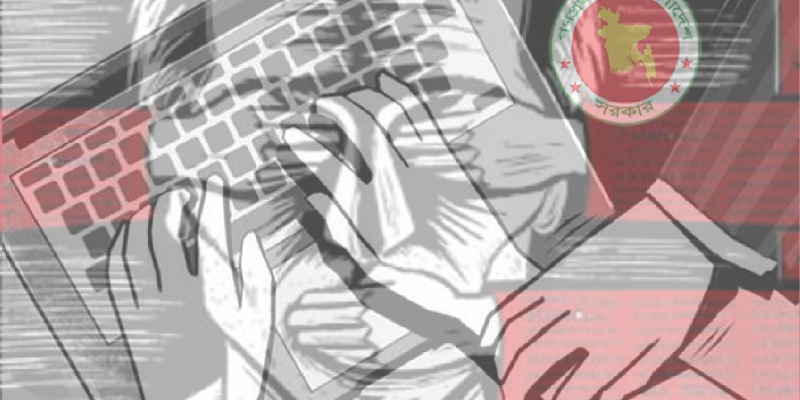
The Information Catastrophe: A Key Catalyst in Sheikh Hasina’s Fall, 2024
As soon as Sheikh Hasina had returned to power — more precisely, from the events of 25 February, 2009 —the people of Bangladesh began to witness, for the first time, the emergence of a state-apparatus that sought to control information with the precision and persistence of an authoritarian regime. What initially appeared as a subtle tightening of the reins soon revealed itself as a full-blown information stranglehold, executed swiftly and ruthlessly. The spectre of authoritarianism, once feared, had materialised—outpacing even the precedents set by her father’s government between 1972 and 1975, and by H. M. Ershad’s regime from 1983 to 1990.
Behind this transformation stood what can only be described as an evil genius—an architect of disinformation—who, from the early days of Hasina’s premiership, crafted a well-oiled propaganda machine, the remote control of which was placed firmly in her grasp. Ordinary citizens soon found themselves alarmingly disconnected from the truth. A simple, unsettling question began to circulate in their minds: “What have we done to be denied access to the truth of the affairs of our own country?”
A telling example lies in the obfuscation of demographic data—intentionally withheld or distorted to manufacture an illusion of economic progress. The very institutions tasked with collecting and disseminating accurate statistics became complicit in deception. Economic indicators were embellished, inconvenient truths buried, and the entire narrative manipulated to maintain a facade of prosperity.
This strategy of projecting a selective, ‘rosy’ image while concealing grim realities represents the essence of the information catastrophe—a deliberate and systemic erosion of the truth. In time, this approach not only discredited the state apparatus but also corroded the trust placed in mainstream media. As official narratives grew increasingly unreliable, citizens turned in droves to alternative sources, particularly social media, in a desperate bid to reclaim a semblance of reality. For example, as the whole world can see on a video footage that the protester has died, bullet-hit by police on the street whereas the bullet injury is obliterated on the post-mortem report by the state machinery is a huge shock for all. In the civilised world the ballistic reports would even single out the gun it fired from.
Whatever was published in the newspapers or aired on television during Sheikh Hasina’s reign increasingly prompted an epistemic question among the populace: “Do we know what we think we know? Is there any way to verify it?” A generation in 15 years—particularly Gen-Z—grew up on a foundation of misinformation and half-truths, all around them including in their textbooks, a psychological distortion of reality that left them disoriented, sceptical, and increasingly alienated from the republic. A dissociation from the reality certainly created a psychological impact in their development psychology which will be worth studying in the fields of Social-Psychology in the upcoming days. In parallel, the state itself was nurturing an authoritarian behemoth that eventually found itself locked in confrontation with the very generation it had misled. The aggression continued to simmer, on the verge of eruption—yet the regime either failed to notice or chose to ignore it, blinded by the utter chaos of their own information cacophony. Character assassination using the mainstream journalism became a weapon of control which "All the “Men of Prime Minister" could not avade as well.
Information tempering by the state can and often does give rise to a mass "us vs them" mentality and corresponding social aggression found in the studies of Social Psychology discipline evident in Bangladesh too:
Polarisation and Distrust: When the state manipulates information, it fosters distrust among citizens—both toward the government and toward fellow citizens who appear to believe or benefit from the state's version of truth. This breeds polarisation. This deep polarisation in Bangladesh landed the country into a fatal conflict with the regime.
Delegitimisation of Opposition The state’s narrative often paints dissenters or critics as enemies of the nation, traitors, or foreign agents. This legitimises aggression—both institutional and societal—against perceived “others.”
Suppression Breeds Backlash Information suppression can radicalise opposition groups, amplifying resistance, resentment, and violent rhetoric—further deepening the “us vs them” dynamic.
Historical Parallels: Autocratic regimes—from Nazi Germany to Bangladesh—have used information tempering to divide populations and justify violence against “internal enemies.”
A meticulously engineered web of falsehoods was erected to obstruct the free flow of information. State institutions became invested in concealing heinous crimes from public scrutiny. Even social media came under unprecedented surveillance, reminiscent of totalitarian states where basic human rights are all but non-existent. The secret agents kept creating a mesh of narratives to confuse the people and fend the social media critics. The mainstream media, rather than serving as a watchdog, was co-opted into a propaganda apparatus, often acting as a mouthpiece for intelligence agencies. In several instances, it appeared as though the state was operating in service of foreign interests rather than its own citizens.
Some foreign actors indeed sought to destabilise Bangladesh by sowing seeds of mistrust between the people and their government institutions. Unfortunately, misinformation from within fuelled this rift even more effectively. As state narratives grew more disconnected from reality, trust in the republic crumbled.
The early years of Hasina’s rule were marred by chilling accounts of murder, enforced disappearances, surveillance, and threats—all revolving around a single axis: control over information. This formed a vicious cycle: human rights violations were followed by manufactured narratives, which were then reinforced through censorship and propaganda. This cycle came to define the very character of the regime.
Examples abound. In 2014, the state claimed that heavy sandful of trucks appeared "from nowhere" to surround the residence of Khaleda Zia. In 2013, they declared that no one had died during the crackdown on Hefazat-e-Islam. The existence of enforced disappearances was outright denied, while judicial harassment of opposition figures was portrayed as the natural result of a “free and fair” justice system. These statements were so farcical they rivalled the incredulity surrounding the official narrative of the 21st August grenade attack. By 2024, public sympathy for those incidents had eroded significantly, as social media figures began exposing regime narratives and gaining massive digital followings.
What startled the nation most was Hasina’s apparent indifference to intellectual discourse or historical reflection. Rather than learning from her father’s authoritarian tenure between 1972 and 1975, she replicated its darkest elements:
1. Control of the media
2. Forced alignment of press with regime’s narratives
3. Inventing false narratives to glorify the ruling party using state funds
4. Harassment of dissenting journalists
5. Mass surveillance, including phone tapping
6. Criminalisation of dissent
7. Curbing of free speech
8. Crackdowns on civil society and NGOs
9. Erosion of democratic institutions
10. Online surveillance and spying
11. Legalisation of authoritarian practices through draconian laws
12. Misuse of draconian laws as a weapon of extortion by individuals
With the rise of social media from 2010 onwards, people desperately sought out the truth—raw, unfiltered, and outside the grasp of state propaganda. Since the social media applications (Facebook, YouTube, Twitter, etc.) were out of government reach they crafted special law in order to force people not to resort to the social media content. Despite intense threats from intelligence, citizens turned to digital platforms to fill the void left by state-controlled media. By 2016, it was clear to the public that censorship served one core purpose: conceal human rights abuses, inevitable to perpetuate the throne and the actual economic downturn.
From 2015 to 2017, mysterious killings of foreigners, allegedly linked to terrorism—including the infamous Holey Artisan attack—became the state’s justification for indiscriminate counter-terrorism operations. Strangely, key suspects, caught red handed by the ordinary civilians, were killed by the state agencies instead of being tried, stifling any real investigation. In many cases, the press quickly went silent.
The information crisis was somewhat managed by the international press. From 2016 onwards, international journalists began to question her legitimacy, and global media outlets increasingly categorised her alongside other "authoritarian rulers". In Bangladesh, she avoided critical interviews altogether. Accountability was sacrificed at the altar of censorship. What she failed to understand that the opinions were being built up in the rest of the world were alarming for her whether she craftily averted the questions or faced them boldly. She could run away from the local journalists, but failed to hide from the international press.
Islamic Terrorist Label
This raised serious doubts about the state’s intentions. Is the state machinery trying to earn the reputation of a “terrorist country” for its own state? Was justice ever the goal? Or were these spectacles staged to delegitimise political opponents and frame dissenters as terrorists?
Bangladesh is a Muslim majority country. Islamophobic narratives—crafted in a Muslim-majority country—were employed as tools of manipulation. Young Muslims were profiled, arrested, and even killed in so-called “encounters,” often without substantial evidence. The police produced films, propaganda videos, and awareness campaigns, reinforcing the myth of home-grown Islamic militancy. This backfired spectacularly, as the people began to view these actions as part of a broader anti-Islamic, anti-youth and anti-citizen conspiracy.
Bangladesh has never historically been a fertile ground for religious extremism. Yet, in pursuit of proving its existence to foreign allies, the government created a monster it could neither control nor handle. In fact, the regime publicly denied the presence of ISIS in Bangladesh, even as it continued manufacturing incidents to support that very narrative. Sheer contradiction of narratives failed altogether to convince the nation of the true lies.
Draconian laws such as the Digital Security Act muzzled journalists and citizens alike, fuelling a wave of viral claims and counter-narratives that further damaged the state's credibility. Repeated arrests of the same individuals in different “raids,” unverified terrorist plots, and frequent “scripted” press briefings pushed the public further into a state of disbelief.
By 2020, the youth of Bangladesh had concluded that these counter-terrorism narratives were performative acts designed to please global allies and secure international aid. The price, however, was paid in blood—often by innocent civilians. In July 2024, as protests escalated, the regime attempted to concoct another “sabotage” narrative—accusing demonstrators of damaging metro rail infrastructure and government offices. But this time, the public did not buy into the theatrics. A nationwide internet blackout only worsened the crisis, allowing security forces to commit further atrocities under the veil of darkness. Ironically, the hardest-hit by the blackout were her own supporters and oligarchs.
By the time Sheikh Hasina fled the country—her departure concealed even from her allies—the edifice of propaganda collapsed. The floodgates of authentic information reopened. Truth, though bitter, began to heal the social contract between citizen and state. The myths that held her regime afloat vanished overnight.
It’s here that the term information catastrophe finds its most poignant application. The regime created layers of disinformation so dense that it could no longer navigate them. To maintain the illusion, it spawned hundreds of Goebbels-like propagandists across the media, intelligence, and academia. These agents, in time, started controlling Hasina herself. Disconnected from the public, she became a captive of the very machinery she built—first a party leader, then a puppet of the deep state. However, she had not come to the state of saying, "Et tu, Brute?"
In the end, it wasn’t just corruption, repression, or economic mismanagement that brought about her downfall. It was the betrayal of truth—the systematic replacement of reality with narrative. According to Erikson’s Eight Stages of Psychosocial Development “issues” the Teen Age (12–18 years) is catered as Identity vs. Role Confusion issue. Imagine a child that was between 5-16 years of age that grew up during the era of Information catastrophe how would his/ her mental development be like in 2020?
Despite heavy propaganda of glorification of the ruling party, even in the school text books, their frustration, despair and discontent with whatever happening around them could not help the regime to influence their social cognitive development and role confusion. In a pool of psychological turmoil, i.e. strong identity or confusion about life direction, this age could adopt any identity for them and lead them to take the role of a rebel of Sheikh Hasina regime fully charged with “us vs them” mental bias and adrenaline hormone. Buoyed by fluid intelligence, these youth navigate the turbulent currents of history, yet are often too young to possess the crystallized wisdom to recognize the mortal cost of confrontation. Still, when public trust collapses, even the most entrenched regime can crumble into ruin. Just as flocks of fragile Ababil birds once felled mighty war elephants, so too did these seemingly powerless young bodies bring down Sheikh Hasina’s formidable state machinery—an undoing of Biblical proportions. Ultimately, this catastrophic clash between people and state, born of a deepening “in-group vs out-group” divide, finds its roots not in ideology alone, but in the catastrophe in information management.
|
যেভাবে সাজানো হয় জঙ্গি নাটক! | সার্চলাইট |পর্ব-২৯৪|২৯ নভেম্বর ২০২৪| Search Light |
|
Hundreds Rally in Bangladesh over Writer’s Death in Prison Mar 2, 2021. Hundreds of people protested for the fourth day against the death of a writer inside a high-security prison in Bangladesh. The case has garnered international concern. On Monday, people gathered near the Home Ministry in the capital Dhaka, calling for an investigation and made other demands. Al Jazeera's Tanvir Chowdhury reports from Dhaka. The death of Mr Mostaque—a scholarly critic of Sheikh Hasina while in police custody—sent a powerful message to the nation: dissent would not be tolerated and would be met with brutality. To the international community, as reflected in global media coverage, it signalled the onset of an information catastrophe in this small corner of the world. This tragic incident sparked a wave of protests across the globe, culminating in the widespread perception that Sheikh Hasina had become a dangerous blend of fascist ruler and desperate autocrat. |
|
Hundreds Rally in Bangladesh over Writer’s Death in Prison Mar 2, 2021. Hundreds of people protested for the fourth day against the death of a writer inside a high-security prison in Bangladesh. The case has garnered international concern. On Monday, people gathered near the Home Ministry in the capital Dhaka, calling for an investigation and made other demands. Al Jazeera's Tanvir Chowdhury reports from Dhaka. The death of Mr Mostaque—a scholarly critic of Sheikh Hasina while in police custody—sent a powerful message to the nation: dissent would not be tolerated and would be met with brutality. To the international community, as reflected in global media coverage, it signalled the onset of an information catastrophe in this small corner of the world. This tragic incident sparked a wave of protests across the globe, culminating in the widespread perception that Sheikh Hasina had become a dangerous blend of fascist ruler and desperate autocrat. |
জঙ্গি নাটকে বন্দি খুবির ২ শিক্ষার্থী, ঈদে পাশে চায় সহপাঠীরা
This report on camera trial of two students of Khulna University says that how widespread was the terrorist tagging spree in Bangladesh by the regime. The state machinery needed to concoct a lot of misgiving on the countrymen questions why spending government money in falsification? Is this the job of a government?
The Daily Kalbela
Terrorism in Bangladesh: Political Manipulation, Ideological Roots, and Western Influence
This article entails how the Executive Branch and Judiciary grouped together to establish Bangladesh as an emerging Islamic Terrorist country. Such self-inflicting efforts, a sheer waste of national resources, were perceived as a deep wound in the reputation of Bangladesh to the rest of the world. Certainly, anger and frustrations propelled from such activities of the state machinery.
The Diplomat
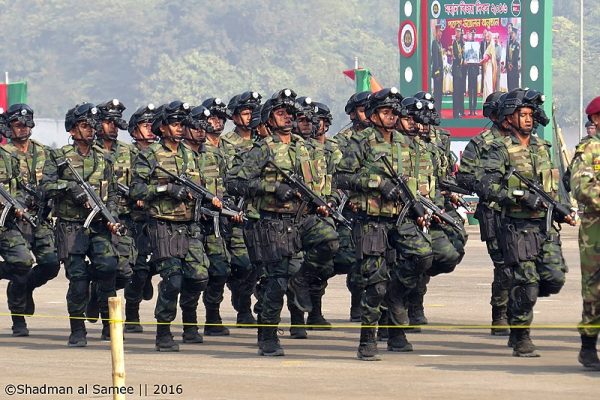
জঙ্গিদের প্রধান পৃষ্ঠপোষক মির্জা ফখরুল: তথ্যমন্ত্রী
On the surface, this appears as mere reportage, but it exemplifies how entrenched narratives are weaponised to discredit opposition political party—a strategy predating the subject’s rise to power. The media’s failure to interrogate these claims, however, represents a dereliction of its democratic duty: journalism should challenge power, not amplify its unchecked assertions. State affairs are no joke or child’s play
জাগোনিউজ২৪.কম
Reason#7
Shattered Economy
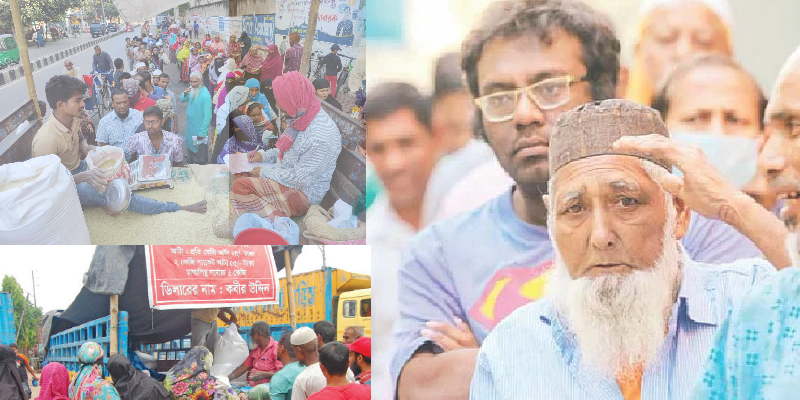
Shattered Economy: The Real Reason Behind Sheikh Hasina’s Fall
If you're a non-resident Bangladeshi, this explanation might surprise you. From 2014 to 2023, Bangladesh basked in grandiose titles from international observers—“Emerging Tiger”, “Role Model of Development”, “Economic Miracle”. Yet, behind this façade, the economic reality was bleak and increasingly unbearable for the ordinary citizen.
For over a decade, Bangladesh's economic narrative was crafted with engineered data, making it an enigma even for professionals. The ground realities told a different story—skyrocketing inflation, silent famine, widespread deprivation in healthcare and education, a rapid devaluation of the Taka, and vanishing savings. Meanwhile, the wealthy elite flourished, and the middle class eroded. The result: a shrinking middle class and a new class of ultra-rich oligarchs.
The Myth of Prosperity
International reports painted a misleadingly rosy picture. Take, for example, the World Economic Forum article published on 19 November 2019, which celebrated Bangladesh’s trajectory toward graduating from LDC status, citing “sustainable development” and “competitive economy”:
“Bangladesh has been classed by the United Nations as one of the world’s least developed countries (LDCs) since 1975, but its current trajectory means it is likely to shed that description by 2024… The more competitive a country is, the more likely it is that it will be able to improve living standards.”
Similar sentiments echoed through reports by the World Bank and the ADB. However, a shift in tone began in 2023 when Bangladesh sought a bailout from the IMF. Compare these two contrasting reports from the World Bank:
a) “Bangladesh Economy Shows Resilience Amid Global Uncertainty” (April 13, 2022)
Weblink: https://www.worldbank.org/en/news/press-release/2022/04/13/bangladesh-economy-shows-resilience-amid-global-uncertainty
b) “Strong Reforms are Critical for Sustaining Growth in Bangladesh” (October 3, 202
Weblink: https://www.worldbank.org/en/news/feature/2023/10/05/structural-reforms-are-essential-to-sustain-growth-poverty-reduction-in-bangladesh
The latter acknowledges the cracks that began to surface beneath the polished veneer.
The ADB, too, delivered mixed signals. While highlighting “impressive economic performance” during FY2016–FY2020, their inflation data told another story: Bangladesh averaged a 6.4% inflation rate between 2014 and 2024—well above Asia’s average of 4.15%. At times, Bangladesh had the highest inflation rate in the region. Even these figures were not trustworthy. In its desperate aspiration to graduate Bangladesh from Least Developed Country (LDC) status to a developing nation, Sheikh Hasina’s government resorted to fabricating economic statistics. It blatantly overlooked the stark reality that such a transition would strip the country of longstanding international trade privileges and tariff concessions—benefits it had relied on for decades. When confronted with the practical ramifications of this move, her regime found itself mired in a self-inflicted crisis, scrambling to address the consequences of its short-sighted gambit.
Fabricated Figures and the IMF Reality Check
The so-called economic boom was fuelled by dubious statistics, particularly regarding GDP and population. The Bangladesh Bureau of Statistics (BBS) reported the population as 149 million in 2011 and 165 million in 2022—numbers widely contested by observers who believed the real figure to be 20–25 million higher. Consequently, per capita indicators and growth rates were artificially inflated.
When the IMF began scrutinising Bangladesh’s books during the 2023 bailout, an alarming picture emerged. Foreign reserves plummeted from USD 45 billion to USD 18 billion in under two years (2022–2024). The public and economic stakeholders alike were stunned. The regime appeared increasingly isolated—without new sources of credit or rescue—and cornered by its own myths.
Even domestic economists found themselves entangled in the regime’s misleading data. Yet, as basic economic logic would suggest, a country with robust growth doesn’t knock on the IMF’s door. The economy had hit an impasse by 2023. Official inflation figures hovered around 9%, but actual inflation felt closer to 30%—crippling daily life.
While global events like the Ukraine-Russia war were cited as scapegoats, oil prices began declining by early 2023. Still, no respite came, as the Taka depreciated nearly 40% against the dollar. Bangladesh had weathered higher oil prices in the past without IMF aid, which only confirmed the deeper rot this time.
Global Indicators Tell the Truth
Beyond inflation, Bangladesh’s global rankings across several indices painted a damning picture:
Human Development Index (HDI): 146th (2009) → 129th (2022)
Global Competitiveness Index (GCI): 106th (2009) → 105th (2019)
Ease of Doing Business: 119th (2009) → 168th (2020)
Corruption Perceptions Index (CPI): 139th (2009) → 147th (2023)
Environmental Performance Index (EPI): 139th (2010) → 177th (2022)
Global Innovation Index (GII): 116th (2009) → 109th (2023)
Logistics Performance Index (LPI): 79th (2010) → 100th (2018)
All of these numbers converge toward one truth: the so-called “miracle economy” was running on borrowed time.
The Gini coefficient, a measure of income inequality, rose from 0.33 in 2000 to 0.48 in 2021. The top 5% of the population controlled over 30% of national wealth, with the top 1% holding nearly 17%. Meanwhile, the bottom 50% owned less than 10%.
A Collapsing Middle Class and Rising Oligarchy
The COVID-19 pandemic exposed just how fragile the middle class had become. Many slipped into poverty as wealth remained concentrated among a select few with ties to politics and industry. From 2016 to 2022, a significant portion of the middle class slid downwards while a small group of oligarchs rose.
This was no accident. The economy was crippled by:
Urban-rural development disparity
Unequal access to education and opportunity
Cronyism and oligarchism
Financial exclusion
A poverty trap for the underprivileged
Labour exploitation
Inadequate social safety nets
A culture of mythmaking over measurable reform
Truth Tellers and Suppression
Despite government attempts to silence dissent and manipulate public perception, the Bangladeshi diaspora and economists continued to expose the economic disaster.
One such voice was Dr. Fahmida Khatun, who wrote in The Daily Star on 4 August 2024:
“The allocation of public resources to the social sectors is very low and stagnant although both the size of the economy and the national budget have expanded over the years… Actual public expenditure for social safety net programme (SSNP) is very low at 1.32 percent of GDP in FY 2025…”
https://cpd.org.bd/bangladeshs-growth-story-lacks-justice-and-humanity/
Further embarrassment came when the Bangladesh Bank was forced to revise figures by a shocking $18.6 billion, admitting to massive discrepancies. In an unprecedented move, journalists were barred from the central bank. Still, they could not stop the IMF from publishing the damning truth in its country report:
https://www.imf.org/en/Publications/CR/Issues/2024/06/24/Bangladesh-Second-Reviews-Under-the-Extended-Credit-Facility-Arrangement-and-the-550944
Conclusion: A Regime Bankrupted by Greed
Sheikh Hasina’s fall was inevitable. The "economic miracle" was a house of cards, built on fabricated data, cronyism, and repression. Yet, behind the glossy headlines and engineered statistics lay a grim reality: soaring inflation, a collapsing currency, and a silent famine gripping the masses boiled the extreme resentment. When the IMF exposed the lies and inflation strangled households, the people’s patience snapped.
The July 2024 uprising wasn’t just about job quotas—it was a rejection of 15 years of economic betrayal – brought in all sects of the people on the streets while the youth were at the tip of the procession. In the end, no amount of propaganda could disguise the truth: Bangladesh’s economy wasn’t growing—it was being looted.
|
This video illustrates how the banking facilities were confined to only a small part of the people of Bangladesh who are called Oligarchs of Sheikh Hasina |
|
সম্পদ ছাড়াই টাকা ছাপিয়েছিল হাসিনা সরকার, The Business Standard Nov 10, 2024 গেল ২০২৩ এবং ২০২৪ অর্থবছরে বাংলাদেশ ব্যাংক বিপুল পরিমাণ নতুন টাকা ছাপায়। দুর্বল ব্যাংক-বিশেষ করে এস আলম গ্রুপের নিয়ন্ত্রণাধীন ব্যাংকগুলোর নগদ অর্থের সংকট মোকাবিলায় ওই টাকা ছাপানো হয়। ফলে দেশের রিজার্ভ মানি বাড়ে ৬৬ হাজার কোটি টাকা। এতে মূল্যস্ফীতিতে কী প্রভাব পড়ে? কেমন করে দুর্নীতি এবং অভিজাত-তন্ত্র এদেশের সম্পদ লুট করার ব্যবস্থা করে দিয়েছিল শেখ হাসিনার সরকার তাঁর একটা সামান্য তথ্য পাওয়া যাবে। পৃথিবীর কোন প্রজাতন্ত্র পাওয়া যাবে না যেখানে এরকম ঘটনা ঘটা সম্ভব। এর প্রভাব ছিল অর্থনীতিতে, বেকারত্বে, টেকসই উন্নয়নে। একই সাথে রাষ্ট্রের জনগণকে নিপীড়ন এবং তথ্য সন্ত্রাসের পেছনের কারন মূলত লুটপাটতন্ত্রকে নির্বিঘ্ন করা। |
শ্বেতপত্র: ২৮ উপায়ে দুর্নীতি, ১৫ বছরে ২৩৪ বিলিয়ন মার্কিন ডলার অবৈধভাবে পাচার
বাংলাদেশের অর্থনীতির অবস্থা পর্যালোচনার জন্য অন্তর্বর্তী সরকার কর্তৃক গঠিত শ্বেতপত্র প্রণয়ন কমিটি সোমবার এক সংবাদ সম্মেলনে বলেছে দেশে গত পনের বছরে ‘চামচা পুঁজিবাদ থেকেই চোরতন্ত্র’ তৈরি হয়েছিলো, যাতে রাজনীতিক, সামরিক ও বেসামরিক আমলা, বিচার বিভাগসহ সবাই অংশ নিয়েছে। এই রিপোর্টে মূলত দুর্নীতির চিত্র তুলে ধরতে গিয়ে অর্থনীতির করুন চিত্র ফুটে উঠেছে। বুঝা যায়, দুর্নীতি এবং অর্থনীতির ধ্বংসযজ্ঞ একই সুত্রে গাঁথা। মূলত দশটি কারনের প্রায় অধিকাংশই এই রিপোর্টে পাওয়া যাবে। তাই এটি একটি মূল্যবান উপাত্ত এই আলোচনায়।
বিবিসি বাংলা
Bangladesh’s growth story lacks justice and humanity
As oligarchs consolidate power in Bangladesh, this incisive analysis by a prominent Bangladeshi economist and researcher lays bare the grim reality of the economy for ordinary citizens—a reality obscured by the systematic manipulation of data by government agencies. Identifying the core threats to the nation’s sustainable economic growth demands not only intellectual rigour but also considerable courage. Critical pieces of the puzzle remain conspicuously absent, deliberately omitted by authorities to distort the true state of affairs. For patriotic economists committed to transparency, the painstaking work of uncovering these missing elements—and speaking truth to power—remains an unenviable yet vital task.
The Daily Star

Reason#6
Legitimacy of the Regime
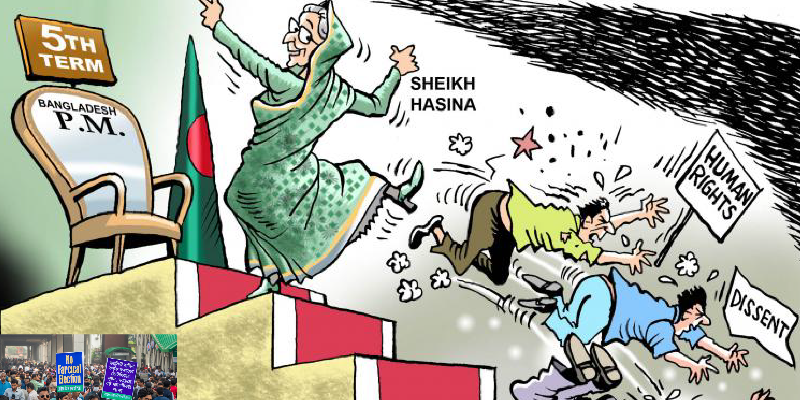
Sheikh Hasina’s regime lost its moral and democratic legitimacy in the eyes of the Bangladeshi people barely three years after she had assumed power in 2009, despite her party’s overwhelming parliamentary majority with her government, by ending the caretaker government system, a constitutional safeguard designed to ensure free and fair elections and democratic continuity. This move, widely perceived as a brazen attempt to entrench herself in power indefinitely, marked the beginning of an authoritarian transformation. She left the only avenue to test her public support through her success in the management of economy, governance, youth employment and in the assurance of sustainable development of the country and in the lives of people. Consequently, any street protest demanding employment or good governance was met with severe repression by her regime.
Throughout 2023, the nation witnessed widespread protests and rallies led by opposition parties, driven by economic hardship and allegations of continual electoral pandemonium—calls that directly challenged Sheikh Hasina’s political legitimacy. These demonstrations were met with harsh suppression by state apparatus. However, the regime’s most critical flaw was not merely its use of force, but its fundamental lack of legitimacy: a government that governs without the consent of its people is ultimately unsustainable.
As a result, the removal of her regime became inevitable, regardless of the manner in which it occurred. By mid-2024, the crisis had reached its peak as she just had finished the most shameless election of all time few months ago. Had the mass protests of July and August not compelled her departure, Bangladesh risked spiralling into the kind of turmoil witnessed in countries like Myanmar or Syria.
The Erosion of Legitimacy: Constitutional Manipulation and Electoral Farces
The fracture of trust between Sheikh Hasina’s regime and the Bangladeshi public became irreversible in 2011, when her government introduced the 15th Amendment to abolish the Caretaker Government (CTG) system—a move widely condemned as a blatant bid for perpetual power. This constitutional sabotage, executed through her parliamentary supermajority, marked the death knell for electoral integrity in Bangladesh.
The Hypocrisy of the Caretaker System’s Abolition
The irony was stark. In 1996, Hasina’s Awami League had waged 100 days of nationwide strikes to demand the very CTG system, which was then enshrined via the 13th Amendment to ensure impartial oversight of elections. The system had successfully overseen the 1996, 2001, and 2008 polls, mitigating the ruling party’s advantage. Yet, by 2011, Hasina justified its abolition by citing the 2006–2008 military-backed CTG’s excesses—a pretext dismissed by critics as a smokescreen for authoritarianism.
The public perceived this reversal as an act of treachery. With the CTG gone, elections became mere theatrical selections, devoid of opposition or accountability.
The Illusion of Democracy: 2014–2024 Elections
2014 Election: The BNP’s boycott reduced the contest to a one-sided farce, with Awami League candidates winning 153 seats uncontested. The regime showed no remorse; instead, it celebrated the hollow victory.
2018 Election: Despite participation under international pressure, the vote was marred by “ballot stuffing” and pre-stuffed ballot boxes delivered to polling stations overnight. In some constituencies, votes exceeded registered voters—a sham the Election Commission refused to address.
2024 Election: The facade collapsed entirely. A “dummy opposition” was engineered, while the UN and global media decried the charade.
The Consequences: A Nation Disenfranchised
Without legitimate representation, citizens grew alienated from the state. The regime’s reliance on crony capitalists and co-opted judiciary deepened public antipathy. By 2024, even the police and civil administration—key pillars of Hasina’s control—began fracturing, with infighting weakening her grip.
The 2024 Uprising: Legitimacy’s Final Reckoning
The July 2024 protests, initially sparked by student demands for job reforms, swelled into a national revolt against Hasina’s illegitimacy. It aligned the parents of the students. The regime’s excessive brutality—shooting unarmed protesters—only galvanised dissent. With no political opponents left to blame, every citizen became her adversary. A powerful question arose in the minds of all citizens: what legitimacy did she have to turn bullets on the sons and daughters of the nation asking for government job quota corrections?
The police-administration rift in early 2024 further puzzled her thinktanks. By 5 August 2024, the collapse was complete. Hasina’s enablers—bureaucrats, MPs, policemen and judges—fled, while her security apparatus crumbled. Had she allowed even a semblance of fair elections, she might have retained a role as opposition leader. Instead, her insatiable grip on power ensured her downfall was as swift as it was inevitable.
Conclusion: A Self-Inflicted Demise
Sheikh Hasina’s regime collapsed not merely due to external pressure, but because it lacked the fundamental legitimacy required to govern. By dismantling democratic norms, rigging elections, and ruling through fear, she turned the state into a personal fiefdom—until the people finally reclaimed their sovereignty.
In absence of any credible electoral process her assertions of success in economic management, governance, youth employment, and sustainable development remained as the sole indicators by which her public support could be assessed—yet these claims often diverged from reality. Perhaps this explains why from the outset, Hasina manipulated state institutions, co-opting the legislative and executive branches to dismantle democratic checks and balances. What followed was a de facto ‘Reign of Terror’: elections after 2009 degenerated into orchestrated selections, opposition voices were silenced, and a cabal of oligarchs and crony capitalists—akin to those in other autocratic regimes—replaced legitimate political representation. The nation watched in despair as its democratic foundations crumbled and shooting military precision bullets at their own children, leaving no recourse but mass uprising or revolution.
|
Bangladesh PM Sheikh Hasina wins historic fifth term in controversial vote | ABC News Jan 8, 2024 This report by Australian news channel on the final election that Sheikh Hasina won covers the oppression of the opposition who had been demanding for a free and fair election under a caretaker government. Bangladesh's Prime Minister Sheikh Hasina has won an historic fifth term in parliament in an election marred by boycotts and deadly violence. The win didn't come as a surprise as the opposition accused the government of rigging the vote. The only suspense was voter turnout, which was half of what it was at the last election. Not elected by a fair election does not legitimise her rule. |
Reason#5
Republic Vs People
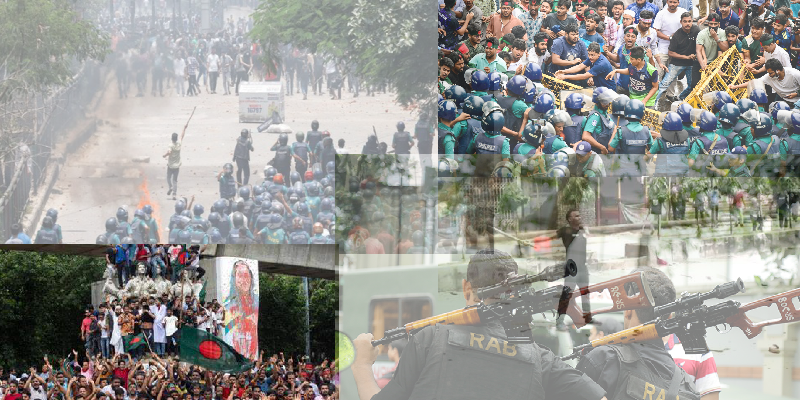
Republic vs People: The Systemic Collapse of Sheikh Hasina’s Regime
The Erosion of Republic into Autocracy
Every nation entrusts its state machinery with the power to defend its sovereignty and citizens. Every state machinery thus retains some muscle power. Yet when that machinery turns against its own people—prioritising regime survival over national interest—the republic degenerates into a quasi-feudal dukedom. This fundamental contradiction, the Republic vs People dynamic, invariably precipitates collapse. History bears witness: the USSR, Weimar Germany, and Cambodia, especially East-West Pakistan all crumbled under such internal fractures. Under Sheikh Hasina’s 15-year rule, Bangladesh joined this ignominious list—a descent into what dissidents termed a reign of terror.
The regime’s death knell came in July-August 2024, when its brutal crackdown on protesters exposed its alienation from the populace. The subsequent fall revealed a stark irony: government officials, once enforcers of Hasina’s will, swiftly defected to the revolution’s student leaders—overnight transforming from oppressors to subordinates in a system they had weaponised. The sheer irony of fate is that these youngsters never aspired to be their boss:; instead, by job-quota corrections they merely began demanding to be their subordinate.
The Tripartite Alliance: Anatomy of a Failed State
Political theorists identify a recurring pattern in autocratic collapses: an unholy alliance between 1) the ruling dynasty, 2) oligarchs, and 3) the deep state. This triad seduces an absolute leader with promises of perpetual power, while systematically dismantling checks and balances.
The Dynasty: Sheikh Hasina consolidated power, eroding the distinction between government and party. To the public, she seemed not so much Bangladesh’s Prime Minister as the Awami League’s leader. Eventually, single-party rule gave way to a dynastic system, with her family monopolising key party roles.
The Oligarchs: Corporate elites institutionalised looting, turning ministries into extraction tools.
The Deep State: Security agencies, ostensibly for national defence, became instruments of suppression.
This alliance’s modus operandi was stark: eliminate dissent (journalists like Sagor-Runi, disappeared politicians like Ilias Ali), capture institutions (judiciary, military), and plunder resources - notably via banks and stock market and put the national interests on the bargain to the foreign entities. The 2009 BDR carnage—a purge of military dissent—marked the deep state’s ascendancy, emboldened by impunity.
It gave the deep-state the much required confidence and the super-structure and a happy start by impairing the combat-spirits of the army officers. Soon a series of horrific acts of her deep-state ensued including the murder of a journalist couple, Sagor-Runi, in their own apartment in front of their child and a few enforced disappearances of politically significant people, e.g. Mr. M Ilias Ali and judicial killing of Mr. Salauddin, Nasiruddin Pintu, and many more. Surprisingly these murders had links with some Indian interest. Mr. Ilias Ali was a staunch critic of India's construction of the Tipaimukh Dam on the Barak River, which enters northeastern Bangladesh at Amalshid in Zakigonj. Any dissent voice to the Indian hegemonies would be severely treated by the deep-state which made it obvious that the Indian secret agents joined hands with this unholy tripartite alliance and became an integral part of the deep-state.
The People’s Awakening
Initially, the public perceived state brutality as isolated excesses. But by the 2020s, the mask slipped: the deep state’s brazenness—enforced disappearances, judicial killings (Salauddin, Pintu), and open collusion with foreign actors (notably India’s RAW)—laid bare its predatory nature.
Government service, once a noble calling, became synonymous with partisan thuggery. Civil servants, now regime enforcers, looted public resources with abandon. This institutional rot created a generational dilemma: should young talents join a corrupted system or resist it?
The Inevitable Fall
By 2024, the regime’s foundations were brittle:
International Isolation: Human Rights Watch and UN reports condemned systemic abuses.
Economic Cannibalism: Oligarchs hollowed out banks, utilities, and the stock market.
Military Disaffection: The army, weary of policing civilians, withdrew support during the July protests. On the other hand, the sovereignty continually becoming at stake.
The Republic vs People conflict reached its climax. On 5 August 2024, the state machinery abandoned Hasina—not out of principle, but self-preservation. The revolution, led by students and civil society, exposed a universal truth: regimes that weaponise the state against their people inevitably face the people’s vengeance. This is a staunch reminder that the state machinery can never overpower the strength of its people. If it gets into the head of the people that they are face to face their own republic the regime collapses.
Epilogue: A Cautionary Tale
Bangladesh’s tragedy mirrors Shakespeare’s Macbeth: "Fair is foul, and foul is fair." Hasina’s initial democratic pretence gave way to a kleptocracy that collapsed under its own contradictions. For future reformers, the lesson is clear: a republic that silences its people ceases to be a republic at all. It becomes a categorical imperative for the people to retain the republic. If the republic continues to dent the strength of the people the price is quite high. The responsibility lies with the state-machinery not with the people.
|
‘দিল্লিতে গু/ম হওয়া’ ব্যক্তিকে আ/সা/মী করা হয় জাহাজবাড়ির ঘটনায় | Bangla Edition |
|
The Mother and the Monster: After Sheikh Hasina, what's next for Bangladesh? | 101 East Documentary May 1, 2025. Enforced disappearances, torture, extrajudicial killings: The human rights abuses allegedly committed by former Prime Minister Sheikh Hasina’s regime have left scores of Bangladeshis scarred and traumatised. After a student-led movement overthrew the government in 2024, the full extent of the suffering is finally coming to light as an interim government, led by 84-year-old Nobel Peace Prize winner Muhammad Yunus, tries to rebuild a shattered nation. From repairing the demoralised police force to seeking justice for victims and presiding over unstable relations with India, it’s a daunting task. How will Bangladesh rise from the rubble of a dictator’s rule? 101 East investigates. |
|
শেখ হাসিনার চলে যাওয়ার দিন যা ঘটেছিল Sep 7, 2024 What transpired on the day Sheikh Hasina fled has been documented in minute detail. This moment marked the culmination of an intensifying standoff between the state and its people. The situation demands serious analysis, as it reveals how Sheikh Hasina’s overconfidence fuelled a persistent and destructive collision between the government and its citizens, ultimately triggering a mass uprising. The transformation of public servants into instruments of state oppression came at a steep cost—not only for Sheikh Hasina herself, but for the entire nation. |
“Where No Sun Can Enter” A Decade of Enforced Disappearances in Bangladesh
Human Rights Watch
Enforced disappearances: 1,600 complaints filed, majority against RAB. 400 complaints have been reviewed so far
Dhaka Tribune
Reason#4
Weak Political Constitute
The Collapse of a Flimsy Political Structure: Why Sheikh Hasina’s Regime Fell
From 2009 to 2024, Bangladesh endured an unprecedented paradox: a republic that systematically dehumanised its own citizens while its deep state eroded national sovereignty—both converging to inflict severe economic oppression on the people of Bangladesh. Authoritarian regimes typically weather such republic-versus-people standoffs with ease. Yet Sheikh Hasina, who had survived tougher situations earlier on, found her regime crumbling overnight. Why so?
The answer lies in the deliberately weakened political structure she engineered.
The Domino Collapse of a Hollowed-Out System
Hasina’s fatal miscalculation was reducing Bangladesh’s governance to a house of cards in aspiration of concentrating the maximum power to herself. Furthermore, the 15th Amendment (2011) dismantled the caretaker government system, eroding safeguards for electoral impartiality - marking the beginning of her unchallenged political ascendancy. In 2024 she could not find a suitable opposition for the Parliament and hence farcically she turned a section of her own party into her own opposition – a docile household opposition. When she fell, her entire apparatus disintegrated within days: cabinet ministers, 330 MPs, police chiefs, agency heads, ruling party committees, mayors, and even the Central Bank Governor vanished—many resigning mid-flight. High Court justices, journalists, and business elites fled into hiding; one retired judge, Mr. Shamsuddin Manik, was apprehended at the Indian border moments before escape. Many resigned voluntarily or refrained from work. Alongside them, several prominent think tanks, bankers, and even local government political leaders of the ruling party went into hiding. Either they lost their structural strength or their moral grounds show their faces around. Thus, they have proven to be useless within the constitution, as the central authority fled the country who consolidated absolute power – rendering all others effectively powerless.
This wholesale desertion exposed a regime with no institutional resilience—only a cult of personality. The country’s President could have been resort. Unfortunately, he too was reduced to little more than a ceremonial oath-taker for the new incumbent. The arbitrary selection process for the Presidency has come at a cost to the nation’s constitution.
The Deep State’s Hostile Takeover
Over 16 years, Hasina allowed the deep state to metastasise, starving the political structure of intellectual vitality. Just as a failed doping test can ruin a talented athlete - undermining natural abilities through steroid dependency - Awami League politicians have become similarly addicted to the quick fixes of deep state manipulation. A pseudo-imperial framework replaced Bangladesh’s fledgling democracy, severing citizens from governance. Election commissioners, presiding officers, and local administrators were handpicked to fabricate results, granting the regime fraudulent legitimacy for three terms.
The republic devolved into a one-woman show. The executive, legislature, and judiciary withered into mere extensions of Hasina’s authority—all consolidated through a ruthless and emboldened deep state. This unchecked power transformed Sheikh Hasina into an omnipotent ruler, growing increasingly reckless as a result—a reality she appeared to revel in, even mocking solutions to food inflation coining new funny recipes and the corruption of her petty associates while ordinary citizens endured hardship.
In an ideal democratic republic, the balance of power is maintained through a carefully designed constitutional structure that prevents any single branch or faction from dominating the others. This equilibrium is achieved through a combination of separation of powers, checks and balances, rule of law, and institutional safeguards.
Separation of Powers is ensured by the government functionalities being divided into three distinct branches – 1) Legislative Branch (Lawmaking), 2) Executive Branch (Implementation) and 3) Judicial Branch (Adjudication) - each with independent authority and responsibilities.
Efficient distribution of power strengthens the republic-constitute by prevents concentration of power by distributing it across institutions. Unfortunately, a silent merger of all these three Branches turned Sheikh Hasina the boss of all three of them – concentration of the state power to the Prime Minister, Sheikh Hasina-so much so that she could not handle the overwhelming power.
Secondly, each branch can limit the others’ powers, ensuring mutual accountability in order to ensure good governance using Checks and Balances which also disappeared in Bangladesh. The President is the Head of the Republic and the Prime Minister is the head of the government of the Republic according to the Warrant of Precedence. Ironically, the President selection was in the hand of the Prime Minister of Bangladesh. The checks and balances were systematically destroyed so that all the independent institutions become slaves to the wishes of the single entity- the Prime Minister- and the deep state becomes the ultimate Executive Branch for the people and the oligarchs flourish. No neutral arbiters - Free Press, Electoral Commissions, Ombudsman/Civil Service, Central Banks - were found to be neutral at all.
Why the Oppression Machinery Failed
Historically, Hasina’s security apparatus crushed opposition. But this time, the regime folded like paper. The difference? A brittle political structure with no succession plan. Unlike resilient autocracies (China, Russia, or even Saudi Arabia), Hasina’s system relied entirely on her presence. When protests erupted, there was no contingency—only sycophants scrambling for exits.
BAKSHAL’s Ghost: A Repeating Tragedy
Sheikh Hasina had weathered severe political storms in the past. So why was she unable to survive this one?
This was not Awami League’s first implosion. In 1975, its attempt to institutionalise authoritarianism under BAKSHAL nearly erased it from politics. The 2011–2024 experiment—a BAKSHAL ver 2.0—ended identically: a landslide collapse, leaving the nation betrayed and the regime extinct. Had there been true political distribution of power and the independent institutions functioning progressively Sheikh Hasina could have saved the country and her regime from collapsing into a ditch of political emergency.
Hasina’s fatal flaw was neglecting to build even a nominal succession framework. Today, no-passport and stateless, she embodies the consequences of conflating state with self—a cautionary tale for despots everywhere. Not only herself and her party, Sheikh Hasina’s continual undermining of the political framework has taken the country back to square one. This is a significant reason why the regime collapsed as running a country having too much power in hands is like tightrope walking requiring super-human skills and talents which are quite rare in the world.
|
A Review by the Daily Amar Desh on the fate of Awami League's political future explains how flimsy is the political strength of the ruling party and so as the republic |
|
Funny Speech by Femail MP in the Parliament Jun 21, 2017. While parliamentary debates should exemplify rigorous discourse, a recent budget speech by an MP—reportedly a political selectee—deviated sharply from this standard. Her rudimentary grasp of the subject matter inadvertently trivialised a critical national discussion, inviting scrutiny of the appointment process for lawmakers. When manifestly unqualified individuals are elevated to the legislature, it does more than embarrass—it degrades the institution’s constitutional role. The Hasina administration’s apparent indifference to such appointments risks normalising dysfunction of the constitutional organs, with long-term consequences for democratic accountability. |
|
সেনাপ্রধান বুকে পাথর চাপা দিয়ে ইউনূসকে মেনে নিয়েছিলেন: আসিফ May 21, 2025 This interview with the chief coordinator of the mass movement, now serving as a senior cabinet adviser, offers a revealing insight into the regime’s final days. His account exposes the profound fragility of Sheikh Hasina’s administration: her party exhibited no political will to reform, while the constitutional architecture provided no lawful avenue for transition. With institutional channels rendered obsolete, her ousting became unavoidable, yet it was ultimately achieved through popular uprising rather than constitutional process. Hence this was a regime collapse precipitated by force Notably, he discloses why the military refrained from confronting the public fury, a decision rooted in concerns over the armed forces’ international standing, given the regime’s eroding legitimacy and precarious political foundations. |
|
বাংলাদেশে আওয়ামী লীগের ভবিষ্যৎ কী? In his incisive analysis for Jamuna TV on 3 March 2025, Barrister Andalib Rahman Partho laid bare the structural vulnerabilities of the Awami League under Sheikh Hasina’s leadership. His examination revealed the grim reality of Bangladesh’s political landscape during her 15-year tenure: a system where power was relentlessly centralised in her personal office, leaving state institutions hollowed out and her party devoid of autonomous leadership. Such was the degree of this consolidation that her removal inevitably precipitated the regime’s collapse, mirroring the fate of political parties whose existence becomes inseparable from their figurehead. The parallel is stark: just as Hitler’s identity subsumed the Nazi Party, so too did Hasina’s dominate the Awami League and, by extension, the Republic itself. |
খুলনা-১ আসনে কী হয়েছিল?
খুলনা-১ আসনে নির্বাচনের ফলাফল ঘোষণায় ‘গরমিল'-এর খবরের কারণে দু'জন সাংবাদিকের বিরুদ্ধে ডিজিটাল আইনে মামলা হয়েছে৷ একজনকে তিনদিনের রিমান্ডে নেয়া হয়েছে৷কেন রিমান্ডে নেয়া হলো সাংবাদিককে? আসলে কী হয়েছিল সেদিন? This report in the German press details how Sheikh Hasina co-opted state institutions, compelling public servants to become complicit in fabricating electoral results. When civil servants can be forced to manufacture democratic outcomes, the very foundation of political representation collapses—rendering the constitutional order meaningless.
DW Online

Reason#3
Corruption, Nepotism & Utter Breach of Governance
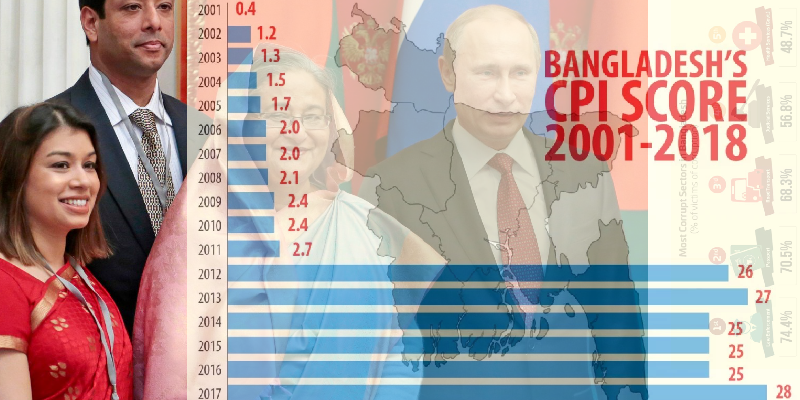
Corruption, Nepotism & Systemic Governance Failure: The Undoing of Sheikh Hasina’s Regime
This issue came to be perceived by the mass population as the root cause underlying the regime's dramatic collapse, eclipsing all other contributing factors in the public consciousness. The sheer scale of corruption, looting, and greed exceeded any conceivable benchmark. Bangladesh, during her rule, became a haven for cronies of all backgrounds and nationalities.
Around 2016 when the traditional sources of funding had not dried up yet, unnecessary though, the regime began borrowing heavily, effectively mortgaging the nation’s future. At that time, the general public remained unaware, although suspicious, of the regime’s spree of so-called ‘mega projects’—which in hindsight were little more than sophisticated siphoning schemes. It was the high time of most of the plunder of public money that had taken place. These suspicions were tragically confirmed when the terms of the IMF loans revealed the true extent of the national debt in 2023. From that moment, the regime lost its moral authority in the eyes of the people as it was no more an open secret that statistics were merely concocted to confuse them. The proverbial Pandora’s box of corruption, money laundering, fraudulent loans, and governance failures was thrown wide open—exposed by both traditional and social media outlets.
A Regime Defined by Kleptocracy
Corruption became the defining narrative—dominant on social media before the regime’s fall, and in mainstream discourse thereafter. Perhaps no other issue captivated the public discourse before the fall of the regime quite like corruption. Social media has been saturated with conversations on the subject, and following the collapse of her government, mainstream media followed suit.
The pressing questions on many minds was stark: Was this entire regime built solely to enrich Sheikh Hasina’s family and empty the national treasury? What would be limit? When would be the end of it?
While scholars often analogise Sheikh Hasina’s governance to 20th-century fascist regimes, the comparison falters on motive. Where figures like Mussolini or Hitler justified repression through ideological narratives, Hasina’s authoritarianism seems principally transactional: a vehicle for kleptocracy and nepotistic wealth accumulation.
In order to execute this plunder, the regime strategically placed loyalists in key positions and initiated obscure, overcomplicated projects that would be difficult for the media or public to scrutinise. Nepotism flourished, particularly within institutions like the Bangladesh Bank, where governance collapsed entirely.
Rather than prosecuting the perpetrators, the regime celebrated them. From 2020 onward, corruption became so brazen that its scars will linger for decades. The final Central Bank Governor epitomized this decay. His hurried looting suggested the regime was preparing to flee.
The validity of years of social media and civic society allegations was confirmed when key people resigned just within a week's time after Sheikh Hasina had fled the country. The institutes, meant to safeguard the national treasury and enforce sound governance in the finance sector, had instead been complicit in the looting.
The Stock Market: A Case Study in Institutionalized Fraud
The stock exchange, manipulated to expropriate public savings, became a microcosm of the regime’s rot. Repeated crashes—each tied to Awami League-linked malfeasance—destroyed investor confidence and invited international fraudsters.
Corruption within the stock market was equally catastrophic. It wiped out the savings of countless ordinary citizens and has yet to recover. Confidence among reputable international investors plummeted, while fraudulent international operators were drawn in. A brief look at major market disasters under Awami League rule highlights the pattern:
1996 Stock Market Crash: A speculative bubble led to a 300% surge, followed by total collapse. Massive losses were borne by small investors.
2010–2011 "Great Fall": Over-leveraged margin loans burst the bubble. Protests erupted. The government injected Tk 50 billion to stem the panic, but market capitalisation still plummeted from $50 billion to $30 billion.
2020–2021 Pandemic Crash: Blue-chip stocks crashed. Though there was a short-lived recovery via government stimulus, it was marked more by speculation than real economic growth.
2022 Volatility: A 15% drop and widespread liquidity crises. Regulatory interventions failed to stabilise the market.
2023 Financial Sector Crisis: Triggered by rampant default loans and banking scams. Investor confidence was shattered.
These events weren’t isolated. They were facilitated by government cronies and tolerated—if not celebrated—by the regime. From 2020 onwards, corruption reached industrial proportions.
In September 2025, the interim government established a Commission for the White Paper on the Economy to investigate the nation’s economic state. According to its findings, an estimated USD 16 billion was being siphoned annually from Bangladesh. The extent of corruption and nepotism during Sheikh Hasina’s rule has inflicted damage that may take three decades or more to repair. Institutions built over 50–60 years to safeguard governance were deliberately dismantled, leaving both the nation and the international community bewildered.
In hindsight, it became painfully clear that what began with grand rhetoric and public trust ended in betrayal and disgrace—an echo of Macbeth’s haunting line: “Fair is foul, and foul is fair.” The regime and its machinery were too busy with the much of “foul” made them draconian and inefficient altogether. By 2023, the IMF loan disclosures laid bare the staggering debt burden, leaving the regime unable to justify its existence to a disillusioned populace. The floodgates then opened: investigative media and social platforms exposed a Pandora’s box of embezzlement, money laundering, and fraudulent loans—all enabled by the wholesale collapse of governance. Thus, corruption, nepotism, and governance collapse stood as the significant justification for ousting her regime.
Hasina’s reign began with democratic pretence and ended as one of history’s most rapacious kleptocracies. This, ultimately, was her undoing.
|
State machinery was used and abused in form of plunder for personal gain of the regime top. This video is unfortunately and example of thousands of others. This was never precedented in the history of Bangladesh |
|
‘কানাডার ৪০০ বাড়ির বেশিরভাগ মালিকই আমলারা’ | White Paper | |
|
'লুটেরা সহযোগী' প্রশাসন কি ঘুরে দাঁড়াবে, কীভাবে সেটা সম্ভব? |
|
যে কারণে আলোর মুখ দেখেনি বঙ্গভ্যাক্স ভ্যাকসিন | Bangavax Vaccine | Kalbela |
|
সম্পত্তি বেচতে ক্রেতা খুঁজছেন নসরুল হামিদ |
|
ব্যাংকে কেন ফরেনসিক অডিটের সিদ্ধান্ত? | Cenbank To Launch ... YouTube · The Business Standard · Dec 11, 2024 Dec 11, 2024. The necessity of a forensic audit for Bangladesh’s banking sector reveals a collapse of oversight so profound it suggests state-sanctioned looting. This institutional decay has fuelled economic instability, eroded public trust, and normalised the silencing of opposition—a trifecta of crises with roots in financial malpractice. |
Reason#2
Reputation Crisis in the International Arena
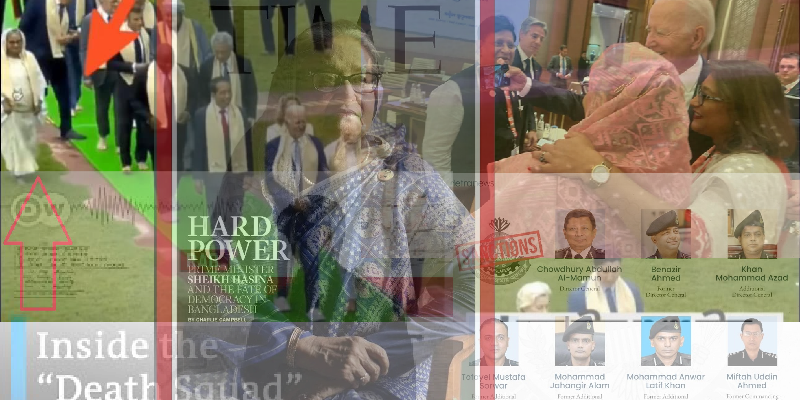
Reputation Crisis in the International Arena: The Final Blow to Sheikh Hasina’s Regime
Sheikh Hasina’s international standing underwent a catastrophic decline from 2023 onward, reaching near-pariah status as the world recognised her orchestration of a sham election in January 2024, nicknamed as “Dummy Election”. This collapse, however, began earlier—her 2018 re-election had already been globally discredited as undemocratic. In 2024 the farce had become complete: Hasina declared herself victorious, while hand-picking her so-called opposition which she herself termed as “Dummy Candidates”, hence it nicknamed “Dummy Election”. By 2024, the façade was untenable: a non-participatory vote delivered her a fifth term while exposing the regime’s isolation. Beyond India and China, few nations engaged with her government; the media universally branded her an authoritarian, and UN bodies condemned her record on human rights. Her regime stood globally discredited.
Under the Microscope of International Media
The international media consistently portrayed her as an increasingly authoritarian figure—and with good reason. Her regime’s actions, particularly regarding human rights violations, drew condemnation from a wide range of United Nations bodies. Since 2019, the more international scrutiny intensified, the more her close associates came under travel bans, sanctions, and asset freezes—especially by the United States. Major global outlets began confronting her directly, referring to her as authoritarian in high-profile interviews. Lacking the diplomatic finesse to respond effectively, she only deepened her image crisis.
By then, even the positive reputation she had once gained—primarily for hosting Rohingya refugees—was eroding. From 2023 onwards, that moral capital no longer shielded her. Worse still, her administration failed to engage constructively with international human rights organisations. Queries and concerns went unacknowledged. No serious attempts were made to signal reform or accountability. While the Rapid Action Battalion (RAB) scaled back visible oppression, sanctioned personnel were promoted rather than prosecuted—signalling impunity rather than reform.
Erosion of Global Credibility
From 2019, scrutiny intensified as Western nations, led by the US, imposed sanctions on key figures in her apparatus—notably the Rapid Action Battalion (RAB). Instead of accountability, Hasina promoted sanctioned officials, deepening reputational damage. Even her sole diplomatic achievement—hosting Rohingya refugees—failed to offset criticisms after 2023. Her government’s non-responses to queries from human rights organisations and reckless public statements (e.g., labelling protesters “Grandchildren of Razakar”) further exposed her prejudicial tyranny to the rest of the world.
Impression Management by Overseas Lobbyists
Efforts by Indian think tanks to rehabilitate her image internationally, especially in the US proved fruitless, resulting in little more than wasted resources. By 2023, virtually every major international human rights organisation, including UN agencies, had raised alarm over enforced disappearances and the systematic silencing of dissent. With a weakened political structure at home, Hasina failed to find a credible spokesperson within her party to represent her abroad. Increasingly, she was boycotted at major international forums, and her inner circle seemed more preoccupied with nepotism and profiteering than with diplomatic strategy.
Ultimately, the burden of reputational collapse fell squarely on Hasina—and she attempted to deflect it to Indian Prime Minister Narendra Modi. Yet turning to Mr Modi, who himself faces substantial international criticism over human rights, was akin to jumping from the frying pan into the fire. India, despite its regional dominance, remains entangled in complex global alliances and lacks the unchallenged authority needed to shield an authoritarian regime from censure. Furthermore, attempts by India to suppress international media coverage of police brutality in Dhaka proved futile.
Relations with the USA
Hasina’s dependence on Indian diplomacy may have misled her into believing that a more aggressive domestic and foreign policy posture would secure her rule. But this strategy backfired. Her public accusations—such as the implausible claim that the United States wanted to annex St. Martin’s Island—alienated powerful actors. She was never seen to embrace dialogue or diplomacy as tools of negotiation, arguably due to poor advice from her inner circle. Indeed, she appeared convinced that increased oppression would eliminate opposition—an assumption that proved politically suicidal.
By 2024, enforced disappearances and suppression of dissent had drawn condemnation from every major international body. With no credible envoy to defend her, Hasina faced silent boycotts at global forums. Her regime’s reliance on Indian lobbying—particularly Narendra Modi’s compromised diplomatic clout—proved futile. China, sensing her vulnerability, withdrew support after her disastrous June 2024 visit, where she publicly vented frustrations, igniting further protests.
The Perils of Misguided Diplomacy
Hasina’s foreign policy was a study in miscalculation:
Overdependence on India: India’s own human rights controversies and middling global influence limited its ability to shield her.
Mega-Project Myopia: Partnerships with China, Japan, and Russia prioritised Indian subcontractors over local employment, breeding resentment without securing lasting alliances.
Antagonising the West: Belligerent rhetoric (e.g., unfounded claims about the US coveting St. Martin’s Island) and vindictive actions (e.g., persecuting Dr. Yunus) alienated potential mediators.
Her advisors—chiefly Indian think tanks—allegedly encouraged escalating repression, wrongly assuming brutality would quell dissent. Instead, it galvanised the Bangladeshi diaspora, whose social media campaigns exposed state violence to global audiences. Unlike Myanmar’s junta (backed by China) or Assad (propped up by Russia), Hasina lacked a steadfast patron.
Why Reputation Mattered
While other authoritarian leaders have maintained power through strong alliances—Myanmar’s junta with China, Assad with Russia, Kim Jong-un with China and Russia, and Netanyahu with U.S. backing—Hasina failed to secure such enduring partnerships. Despite awarding lucrative contracts in Bangladesh’s mega-projects to foreign players, particularly Indian firms, she failed to earn long-term allies.
The transactional nature of her international relations, focused more on economic incentives than shared values, left her vulnerable. She alienated her own people in favour of foreign interests, missing the opportunity to build national resilience through inclusive, domestic economic policies. Ultimately, no international power was willing to stand by her.
Authoritarians survive through external legitimisation. Hasina’s failure to secure this—coupled with her self-inflicted isolation—made her ouster inevitable. When protesters realised the world would no longer tolerate her framing dissent as “terrorism,” the regime’s fragility was laid bare.
This crisis was intertwined with her other failures: economic mismanagement, youth unemployment, and institutional rot. But the loss of international standing was the death knell—a lesson for dictators: without allies, even the most entrenched regimes crumble.
Of the ten primary reasons for Sheikh Hasina’s downfall, her international reputation crisis stands as the second most critical—not merely due to its symbolic weight, but because it represented the final nail in the coffin. A government’s legitimacy depends not only on internal control but also on external recognition. The sense of global embarrassment galvanised the protest movement. Once the regime could no longer portray the protesters as “terrorists” in the eyes of the world, the people knew the time had come. And they moved decisively.
|
জাতিসংঘই হাসিনার পতন ঘটিয়েছে? Zahed's Take । জাহেদ উর রহমান । Zahed Ur Rahman. This video is adequate a proof of international pressure on Sheikh Hasina and its impact on her eviction |
|
In this interview in 2023 Sheikh Hasina was asked to respond to her reputation as an authoritarian leader. Facing such direct question by Yalda Hakim is perceived as an echo of the rest of the world talking about her. |
|
In this interview soon after 2018 election in Bangladesh DW raises the question of the election anomalies which certainly were not properly explained by Sheikh Hasina. If you listen to the questions and the replies you would notice that the confusions abo |
|
Sheikh Hasina - 'It is my struggle' to establish free elections During an interview on Sunday with Laura Kuenssberg (BBC One, 18 September 2022), the Bangladeshi Prime Minister Sheikh Hasina faced pointed questioning about ensuring free and fair elections in Bangladesh, following widespread scrutiny of the 2018 results. Notably, this exchange occurred during her UK visit to attend Queen Elizabeth II’s state funeral. What proved particularly striking was Hasina’s attempt to deflect allegations by drawing parallels with perceived electoral irregularities in the UK itself—a remarkably ill-judged comparison for a visiting head of government. The interviewer’s visibly muted reaction underscored just how diplomatically inappropriate this deflection was. Yet such tough questioning has become a recurring theme in her international engagements. Her responses—ranging from dismissive comparisons to historical whataboutism (notably referencing past military regimes)—failed to address core democratic concerns. Most revealing was her tacit admission of electoral malpractices through equivocal justifications ("others did worse") rather than substantive rebuttals. This pattern of deflection and inadequate preparation suggests either a fundamental misunderstanding of democratic norms or a calculated avoidance of accountability—neither reflecting well on her office’s engagement with global scrutiny. |
|
Bangladesh PM Sheikh Hasina‘s interview to ANI This analysis bears the hallmarks of an Indian think tank, detailing their strategic cultivation of Sheikh Hasina and coaching her to reframe contentious debates by invoking the murder of her relatives—a recurrent deflection tactic. |
|
Exclusive interview with Bangladeshi Prime Minister Sheikh Hasina (CGTN) Chinese media once vied with Indian think tanks in flattering Sheikh Hasina, aiming to expand Chinese business interests in Bangladesh. For a time, this strategy proved effective—until it became apparent to the Chinese that her political days were numbered. Notably, Chinese media ceased interviewing her after 2019. It is worth noting what CGTN wrote as the description of the video: Jul 7, 2019 Bangladeshi Prime Minister Sheikh Hasina is visiting China from July 3 to 5, when she is expected to ink several agreements, focusing mostly on power generation and economic cooperation. CGTN reporter Liu Yang sat down with Hasina to hear more about her visit. |
|
Aug 8, 2012 BBC HARDtalk Sheikh Hasina Prime Minister of Bangladesh. The BBC’s HardTalk has long held leaders to account, but few interviews have aged as tellingly as its exchange with Sheikh Hasina. A decade on, the probing questions about governance and democracy still resonate—while her deflective answers remain equally emblematic of a leadership style that prioritises obfuscation over accountability. |